
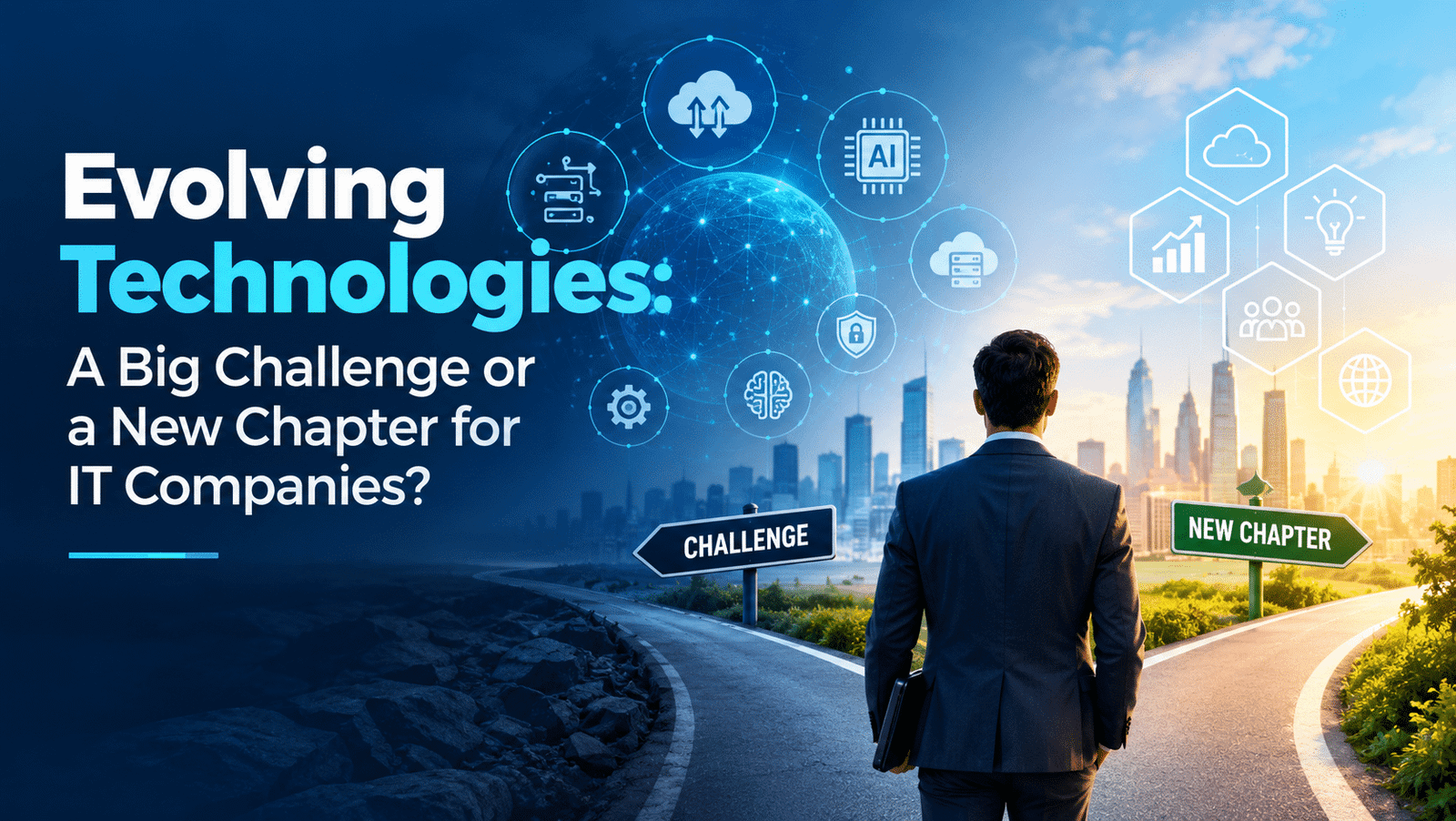
Technology is not only evolving but is doing so at a pace that is unmatched in our history. From artificial intelligence and automation to cloud computing and low-code development, the world of information technology is rapidly shifting. What may have been state-of-the-art yesterday may already be obsolete today. For information technology companies, this is a big question to ponder on:
Is this evolution a challenge… or an opportunity?
The Reality: It’s Both
The truth is, technological evolution presents both significant challenges and exciting opportunities. It demands resilience, adaptability, and a forward-thinking mindset. Companies that fail to evolve risk falling behind, while those that embrace change can unlock unprecedented growth.
Challenges
Upskilling – One of the most pressing challenges for IT companies is the continuous need for upskilling. As new technologies emerge, teams must constantly learn and adapt to stay relevant. Whether it’s mastering artificial intelligence, understanding cloud architectures, or adopting new programming frameworks, the learning curve never stops. This requires ongoing investment in training, time, and resources, which can be particularly demanding for growing organizations.
Increasing Client Demands – Today’s clients are more informed and demanding than ever before. They expect faster delivery, innovative solutions, seamless user experiences, and cost efficiency—all at the same time. Meeting these expectations while maintaining quality can put immense pressure on IT teams. Companies must balance speed with precision, innovation with practicality, and cost with value.
Increasing Security Risks – As digital systems become more advanced, cyber threats are also becoming more sophisticated. Data breaches, ransomware attacks, and system vulnerabilities pose serious risks to businesses and their clients. IT companies are now expected not only to build solutions but also to ensure they are secure, compliant, and resilient. Staying ahead of cybersecurity threats requires constant vigilance, updated tools, and specialized expertise
Selecting Appropriate Technologies –With a vast array of tools, platforms, and frameworks available, choosing the right technology stack has become increasingly complex. The wrong choice can lead to scalability issues, increased costs, and project delays. IT companies must carefully evaluate each option based on project requirements, future scalability, and long-term sustainability. This decision-making process is critical and often challenging.
Opportunities
New Business Models
Technological advancements have enabled IT companies to move beyond traditional project-based work. Models like Software as a Service (SaaS), subscription-based services, and platform solutions are creating new revenue streams. These models not only provide consistent income but also foster long-term client relationships. Businesses can now focus on delivering continuous value rather than one-time solutions..
No Geographical Boundaries
IT companies can now work with clients from different parts of the world without needing a physical presence. This global reach opens up access to diverse markets, larger projects, and international exposure. It also allows companies to build distributed teams and leverage talent from across the globe.
This opens access to larger markets, diverse projects, and international growth.
Automation
Automation reduces manual effort, improves efficiency, and accelerates delivery timelines.
It allows teams to focus more on strategy, creativity, and high-value work.
This enables teams to focus on strategic initiatives, innovation, and problem-solving rather than routine work. Automation not only boosts productivity but also accelerates project delivery timelines.
Innovation Leadership
Early adoption of emerging technologies helps companies stand out in a competitive market.
It positions them as forward-thinking leaders and trusted partners for modern solutions.
Whether it’s leveraging AI for smarter solutions or integrating advanced analytics for better decision-making, innovation drives differentiation. Clients are more likely to partner with organizations that demonstrate forward-thinking capabilities and a commitment to staying ahead of the curve.
The Shift in Mindset
While technology continues to evolve, the real transformation lies in mindset. IT companies must rethink how they operate and deliver value. Success in this new era requires a shift:
- From service providers to strategic partners
- From execution-focused to innovation-driven
- From short-term projects to long-term value creation
Organizations that adopt this mindset are better equipped to navigate change and build sustainable growth. It’s no longer just about delivering a product—it’s about creating impact and driving business outcomes for clients.
Conclusion:
The evolution of technology is not the problem, it is the test. It challenges IT companies to adapt, innovate, and grow. While the journey may be complex, it is also filled with immense potential.
In the end, this is not just a phase of disruption. It is the beginning of a new chapter—one defined by innovation, agility, and limitless possibilities.
Those who adapt to this ‘challenge’ will make this their greatest chapter in growth.
Let’s Build the Future Together
If you’re looking to scale your business with the right technology, build a reliable remote development team, or create innovative, future-ready solutions, we’re here to help.
Let’s connect and explore how we can support your vision with the right strategy, talent, and technology.