

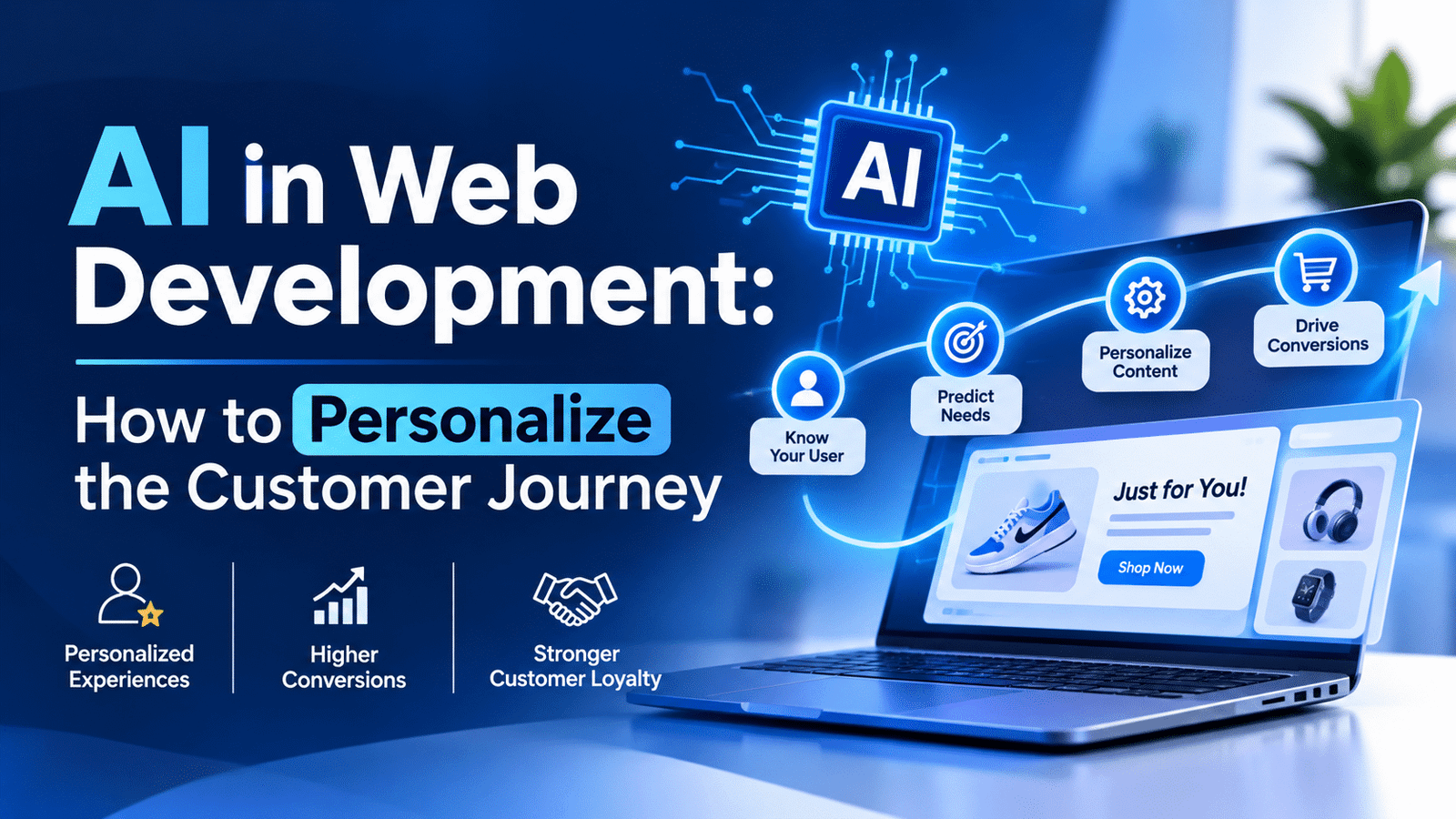
Imagine a returning customer opening a large product catalog to reorder supplies. They know what they bought last time, but the website sends them through the same broad categories as a first-time visitor.
Showing their previous orders may solve that problem without AI. Suggesting a relevant alternative when an item is unavailable may require a more sophisticated recommendation system. Choosing the right approach starts with understanding the task.
AI web development is useful when it helps people find information, compare options or complete work more easily. Adding an AI feature because it is fashionable can make a journey more confusing and expensive to maintain.
Separate personalization from a simple rule
Personalization changes an experience using information about the visitor or their context. Some changes follow straightforward rules: show the selected language, remember a filter or use an account’s agreed price list. Others use models to predict which content or products may be relevant.
Use a rule when the relationship is explicit and easy to maintain. Consider AI when the choices are numerous, the patterns are less obvious and you have appropriate data to evaluate the result.
A service website with a small audience may gain more from clearer navigation than a recommendation model. Start with the simplest approach that addresses the customer’s difficulty.
Identify one useful moment in the journey
Choose a concrete problem rather than a website-wide personalization project. For example, visitors may struggle to search a catalog because they use everyday terms instead of internal product labels. A search system that interprets those terms could help them reach relevant results.
A software company might help readers move from an article about system integration to a relevant service explanation. A returning customer might benefit from a reorder suggestion that respects their account’s catalog permissions.
Describe the desired behavior before building: “Help eligible customers find an available replacement,” rather than “Make the experience smarter.” The first statement gives you something to test.
Use data the customer would reasonably expect
Reliable personalization needs reliable inputs. Product availability, content categories and account preferences may be more useful than collecting large amounts of browsing history without a defined purpose.
Document which data the feature uses, why it is needed, who can access it and how long it is retained. Handle consent and privacy obligations for the relevant jurisdictions with appropriate advice. Do not infer sensitive traits merely because a model can attempt to do so.
Account-specific content also needs proper access controls. A recommendation system must not reveal another customer’s orders, confidential prices or documents.
Keep the visitor in control
Helpful personalization supports choice. It should not prevent a shopper from exploring the full catalog or hide an important service because a prediction says it is irrelevant.
Make filters editable, explain useful recommendations in everyday language and offer a route back to the standard experience. A visitor looking for a gift may not want recommendations based on their own previous purchases.
The AI user experience also needs a fallback. When the model or data service is unavailable, the page should still provide useful navigation and accurate information. A dependency failure should not turn a readable page into an empty screen.
Give generated answers a trustworthy boundary
If you add a conversational assistant, connect it to approved information and define the questions it can answer. Product specifications, return terms and service details should come from maintained sources.
Treat generated answers as outputs that need evaluation. Test missing information, ambiguous questions and attempts to get private data. When the system cannot support an answer, it should say so and offer an appropriate human contact or source page.
Do not allow a conversational interface to invent prices, availability or commitments. Actions that affect an account or transaction need permission checks beyond the conversation itself.
Select tools for integration and maintenance
Website personalization tools differ in the data they need, the control they give editors and the systems they connect to. Evaluate them against a specific use case rather than a long feature list.
Ask how the tool handles access, deletion, experimentation, fallback behavior and performance. Check whether the team can inspect why content appeared and correct outdated information. Include ongoing catalog or content maintenance in the implementation plan.
Dynamic web personalization can also complicate page delivery and analytics. Keep core service information accessible, and measure the experience that visitors actually receive.
Measure customer progress
For catalog search, measure successful searches, irrelevant results and movement toward a purchase. For a service website, track relevant inquiries and qualification outcomes. More recommendation clicks alone do not establish a better journey.
Compare the personalized experience with a suitable baseline where traffic supports it. Monitor failures, latency and whether important customer groups are receiving worse results. With small samples, use task-based testing and longer observation rather than a confident uplift claim.
Common questions
Does every business website need AI personalization? No. Clear content, usable search and relevant service pages should come first. AI is worth evaluating when it addresses a specific problem these improvements cannot handle well.
Can personalization work with little customer data? Sometimes. It can use the current task, an explicitly chosen preference or product information. Results still need evaluation, and a rules-based approach may be more suitable.
Where should we start? Choose one important journey, define a baseline and build a small, reversible pilot with a standard experience available. If you are exploring AI development services, bring the customer problem and the systems involved to the discussion. EastSons can help you scope an AI web development project around a practical use case, implementation requirements and a way to evaluate its value.