
Businesses can no longer afford to ignore mobile applications, which are essential for increasing revenue, improving operational efficiency, and engaging customers. But creating an app alone is insufficient in the cutthroat digital world of today. “Having an app” must give way to “building a business-centric solution.”
Let’s examine the most recent developments in mobile app development and provide a useful road map for producing an app that genuinely adds value to businesses.
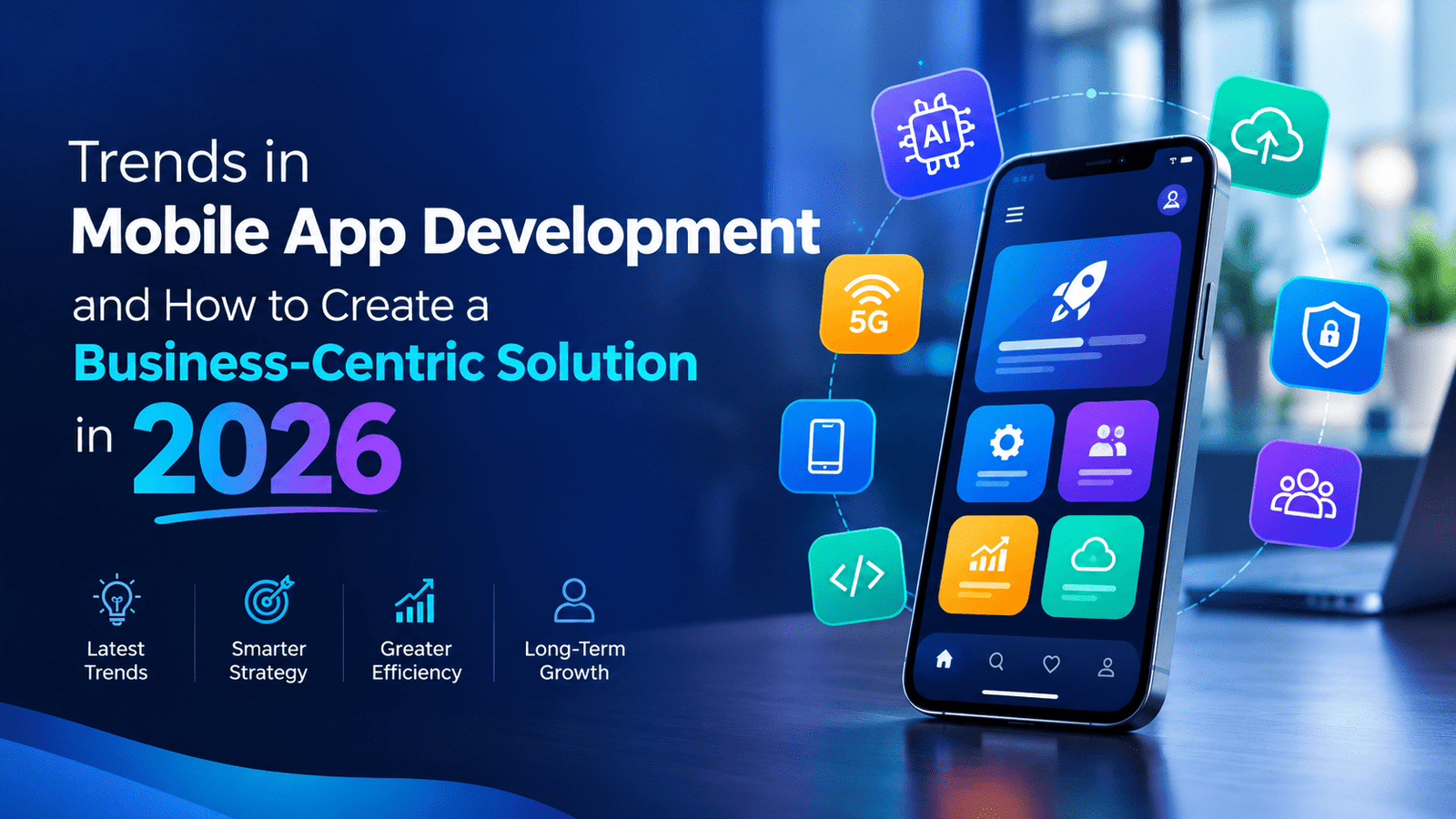
Important Trends Affecting Mobile Applications
AI-Powered Customisation: Predictive insights and more intelligent user experiences
Cross-Platform Development: Quicker launches with more efficient spending
Cloud-based architecture: systems that are secure, scalable, and prepared for the future
System Integration: Linking applications to accounting, HRMS, CRM, and ERP systems
Data-Driven Decisions: Using real-time analytics to boost company expansion
Impact on the business: increased customer satisfaction, retention, and engagement.
How to Develop a Business-Centric Mobile Solution
Strategy Before Technology
Technology alone does not guarantee success, strategy does. A business-centric mobile solution starts with a clear objective that defines the problem to be solved. Whether it is revenue, efficiency, or engagement, measurable KPIs ensure real ROI.
Understanding the User Journey
Successful apps are designed with the needs of the user in mind, rather than hypotheses. It is essential for businesses to understand the pain points and motivations of their target audience.
Launching with an MVP
With a Minimum Viable Product, businesses can quickly validate the key features of their solution. This is especially important in the early stages of development. By doing so, they can refine their solution based on real user behavior.
Integration with Business Systems
An app that is business-focused must be able to integrate with CRM, accounting, HR, and other business systems. This makes the app a one-stop engine for the business.
Leveraging Data & Analytics
Each user interaction must provide actionable insights. Engagement, conversion, and revenue tracking provide insights for decision-making. Data-driven optimization provides a competitive edge.
Final Perspective
The key to successful mobile solutions in today’s world is strategy, integration, and impact. Companies that use technology to achieve their goals will be at the forefront of the digital world.
A successful mobile app is not about functionality; it’s about impact.
The question is no longer “Do we need an app?”
It’s “How can our app accelerate business growth?”